From a Crafting Spot to a Working Colony: Early Tools, Textiles and Research
OCTOBER 12-26, 2026 / DEVELOPMENT UPDATE
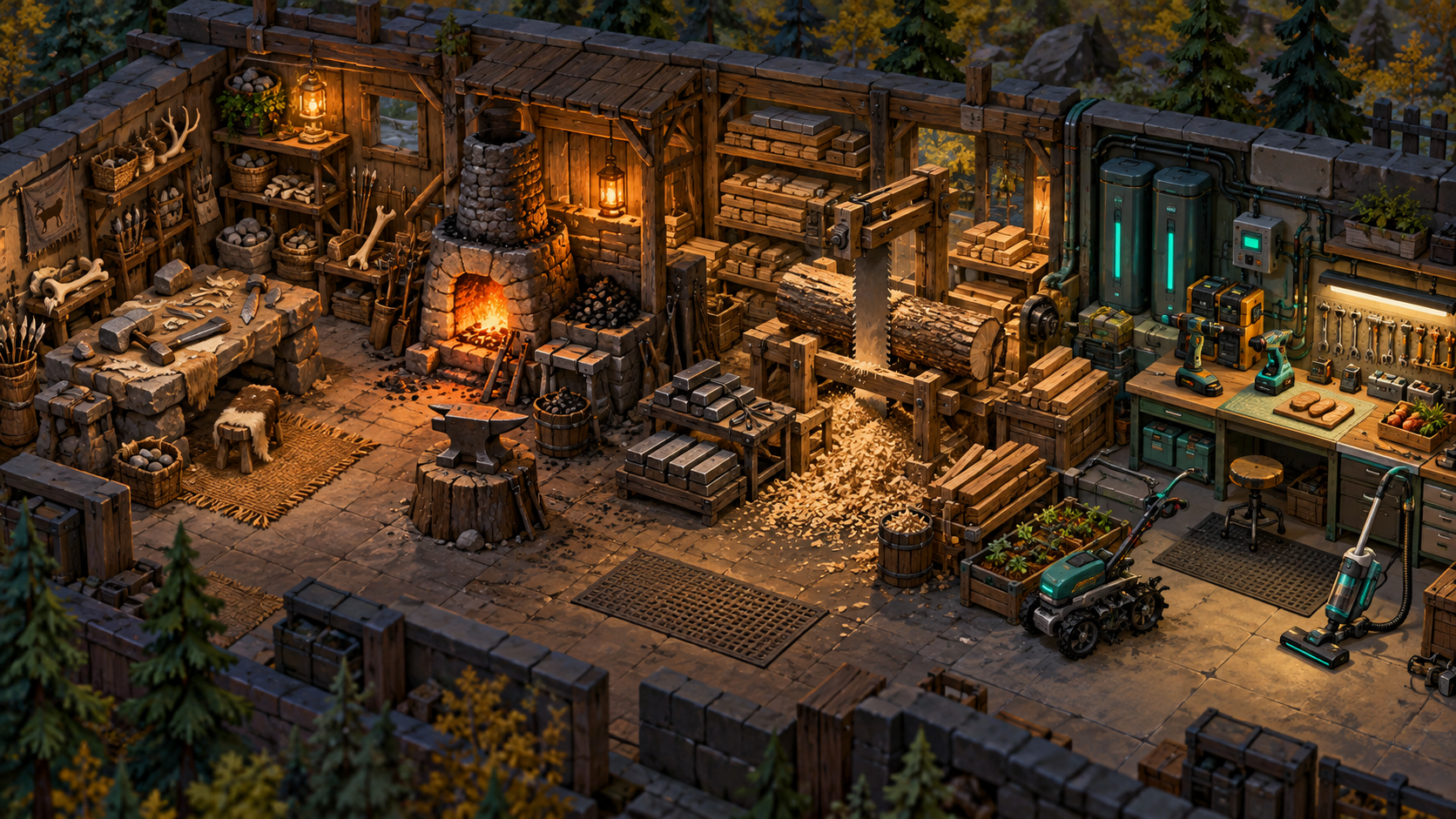
A colony's first upgrade is often a tool that lets someone finish the job already waiting in front of them. October's early-workshop changes strengthen that first stretch: primitive recipes, usable production benches, cotton processing, tanning and research aids all contribute before a settlement reaches its electric ambitions.
Give the worker the right equipment
Stone and bone tool recipes were restored to the Crafting Spot as well as their appropriate specialized benches. A starting colony can establish basic equipment without first solving the problem of constructing every later workstation. Missing-tool alerts explain several common obstacles: no matching tool, an exhausted tool, a forbidden item or a tool the pawn cannot reach.
The later .109 enforcement pass checks that miners carry a usable pickaxe or mining drill and that tree workers carry an axe or chainsaw. Equipped tools, inventory tools and tools inside a worn toolbelt count. A tool lying beside the worker does not count until it is carried. Automatic fetching still needs a toolbelt and its enabled option. The requirement can be disabled through the existing setting; the default remains ON.
Turn harvests into useful materials
The primitive loom and electric loom now have distinct artwork and roles. The refined electric loom uses an all-steel frame with a cotton feeder, costs 120 steel, draws 250 W and works three times faster than the hand loom. It unlocks after Machining. Earlier notes listing component costs describe an older recipe.
The tanning station restores the missing step between raw hides and finished leather. Its four-direction artwork was fitted to a 4-by-1 footprint. The documented recipe turns 20 matching raw hides into 20 matching leather plus one leather scrap, with Crafting 2 and a usable knife. Existing finished leather remains usable. The raw-hide category and Make any leather bill make the new chain easier to find.
Bio-Arbor textiles also distinguish harvested fiber from finished fabric. Six restored GMO cloth definitions have matching 8-to-8 weaving recipes. Cattail cloth and Make any cloth expand the loom menu. This distinction matters when a tailoring bill accepts finished fabric but the stockpile still contains raw fiber.
Research benefits from a prepared room
Bench-side aids offer a progression from an abacus through an electric calculator, laptop, AI computer and portable AI analyzer. Their documented research bonuses run from 5% to 35%. Placement matters: the aid belongs in the same room and within three tiles of the bench. Only the highest available aid applies, so a room full of aids does not multiply every bonus.
The portable analyzer also has a nearby hacking benefit. In the newest bone-furniture addition, the research skeleton offers another 5% research aid under the same strongest-aid rule. Tool cabinets and their storage now unlock through Complex Furniture, which puts organization earlier in the settlement's growth.
A useful first test
Start with a small chain: craft a primitive tool, put it on the intended worker, run one production bill, and check the output's storage filter. If work stalls, inspect the bill's ingredients, skill, work assignment and carried tool before adding more stations. The relevant builds include compilation, definition and focused checks; bench interaction and complete production chains still deserve testing in the actual colony.